2026-08-30T17:55:05.360Z ·
Signs of polybutylene pipe failure in 1980s and 1990s NC homes
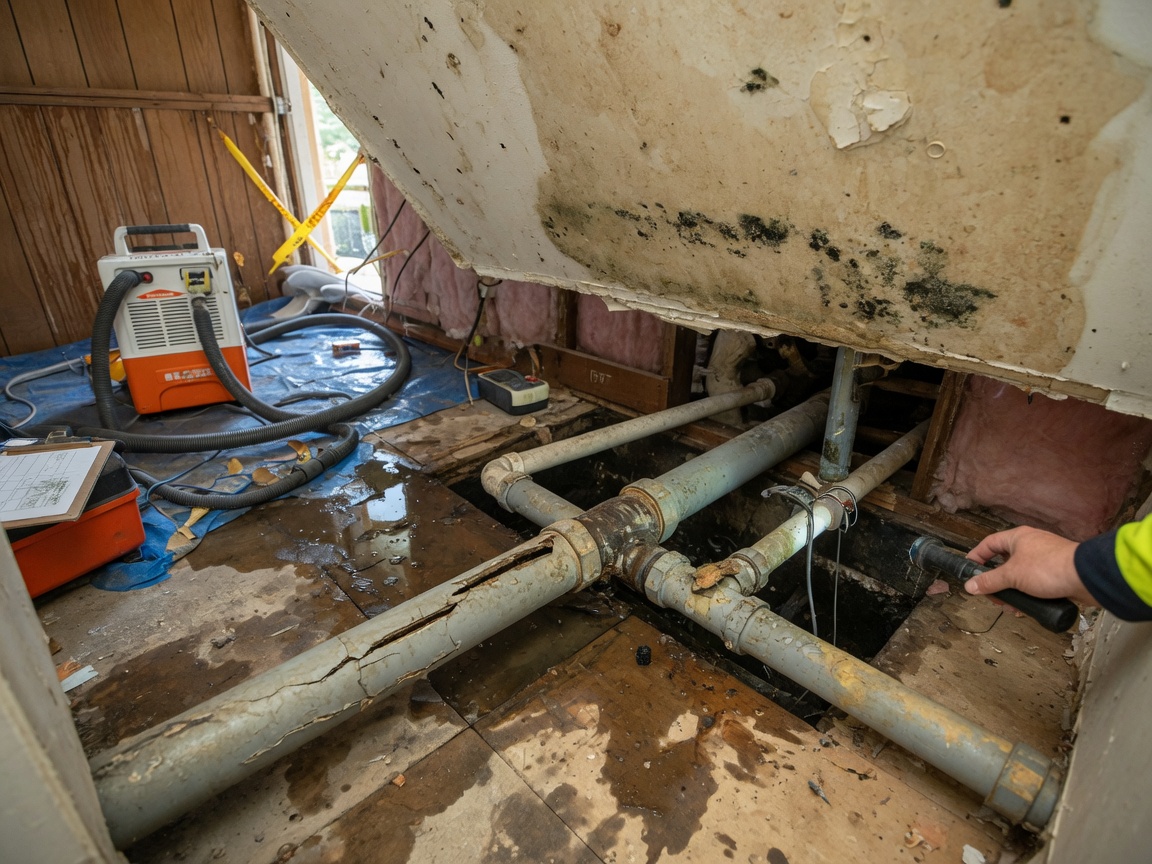
Signs of polybutylene pipe failure in 1980s and 1990s North Carolina homes include gray flexible supply pipe stamped PB2110, staining or moisture at fittings, and sudden indoor leaks in houses built roughly 1978 to 1995. Early acetal plastic fittings were a common weak point. The pipe can look fine while the fitting is already cracked.
Check at the water heater, under sinks, and in the crawl where the main enters. Dull gray tubing with metal crimp rings is the usual look. Blue or black PB exists, but gray is what most Triangle owners find. If you see copper or modern PEX throughout, you may already be past a full re-pipe.
Failure is often sudden: a spray into a wall cavity or a crawl bay, then a wet ceiling or soaked insulation. Polybutylene pipe leak cleanup is the water response. A plumber confirms the material and plans replacement. Restoration does not replace the whole system.
Chlorine in municipal water and years of pressure cycles stress the material. Hot lines and fitting connections take the worst of it. Neighboring houses from the same builder era can fail in clusters, which is a useful inspection clue when you are buying, not a guarantee about your walls.
North Carolina real estate practice treats mere presence of PB as not automatically a material fact, but a known leak or defect is different. That is a disclosure conversation with your agent. Our job starts when water is already out of the pipe.
If you have an active leak, shut the water and call (984) 230-5534. Emergency water extraction comes first. Read crawl burst steps if the line is under the house.