2026-08-30T17:55:05.360Z ·
How to tell if your Raleigh crawl space has a moisture problem
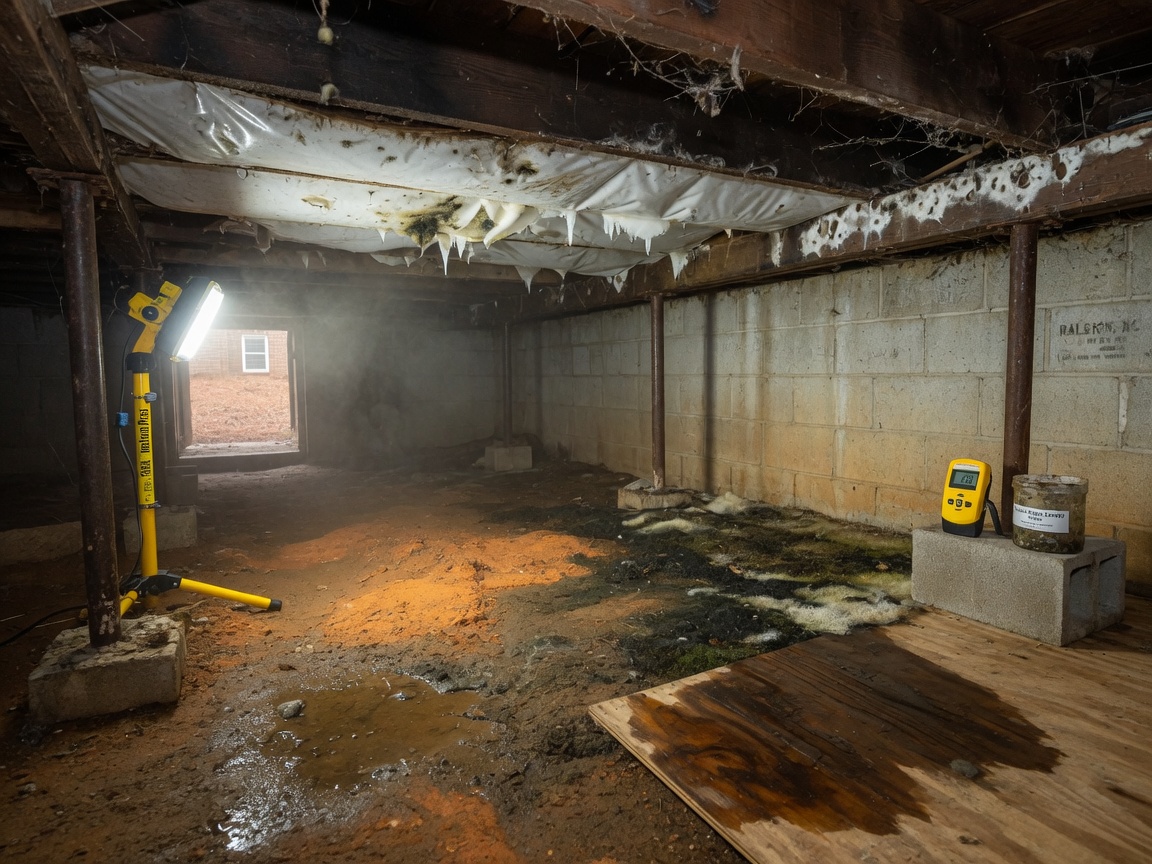
A Raleigh crawl space usually has a moisture problem if you smell musty air at the floor registers, see cupped hardwood, find insulation hanging from the joists, or measure high humidity under the house even when the living room feels fine. Vented crawls over Piedmont clay take on soil moisture and humid outdoor air. Standing water turns that into a mold engine.
Look from the hatch with a strong light before you crawl. Standing water, dark joists, soggy batts, and a missing or shredded vapor barrier are visible tells. Condensation on ductwork and rust on the HVAC unit in the crawl are humidity tells even when the dirt looks dry that afternoon.
Upstairs clues matter because many owners never go under the house. A room that feels clammy at the baseboards, carpet that never smells clean after ordinary cleaning, or flooring that peaks at the seams often traces back to wet wood below. Crawl space water removal is the response when free water is present.
Long-term humidity without a puddle still needs a plan: vapor barrier on bare soil, managed vents or encapsulation, and a dehumidifier sized for the volume. Crawl space mold remediation comes after the moisture source is controlled, not before. North Carolina does not license mold remediators, so focus on the moisture mechanics rather than a fake license number.
Clay soils and downspouts that dump at the foundation reload the crawl after every heavy rain. Fixing grade and discharge is often cheaper than repeating dry-outs. How long drying takes once water is under the house depends on how wet the wood already is.
If you are unsure, call (984) 230-5534. A moisture map under the house answers the question faster than another bottle of carpet deodorizer.